
This is a personal side project and an evolving proof of concept, built to explore how AI can help solve real-world CRM operational challenges.
How 10 years of CRM experience and AI-assisted development helped me turn everyday operational challenges into a campaign management platform.
The Context: Why I Built This
Over the past 10 years, I’ve worked across different industries managing CRM initiatives, marketing automation and omnichannel campaigns.One challenge I’ve consistently encountered is that executing a marketing campaign involves much more than creating content and pressing “Send.”
Behind every email, SMS, WhatsApp message or clienteling activation, there’s an entire operational process: planning, creative development, translations, implementation, testing, approvals and scheduling. And when you’re coordinating multiple markets, external agencies and internal stakeholders, things can quickly become complex.
Campaign backlogs often live in spreadsheets, approvals happen through endless email exchanges, and tracking progress means switching between different tools.
Having experienced these challenges firsthand, I started wondering:
What if the entire campaign lifecycle could be managed from one intuitive workspace?
That’s how this personal project started.
Using AI-assisted development tools, particularly Claude, I began building a CRM Campaign Management Platform completely ad-hoc, designed around real operational challenges. The goal is to create a complementary layer that connects campaign planning, execution, collaboration and performance insights.
I focused on five principles: centralization, visibility, accountability, standardization and efficiency.
Here’s a look at what I’ve built so far.
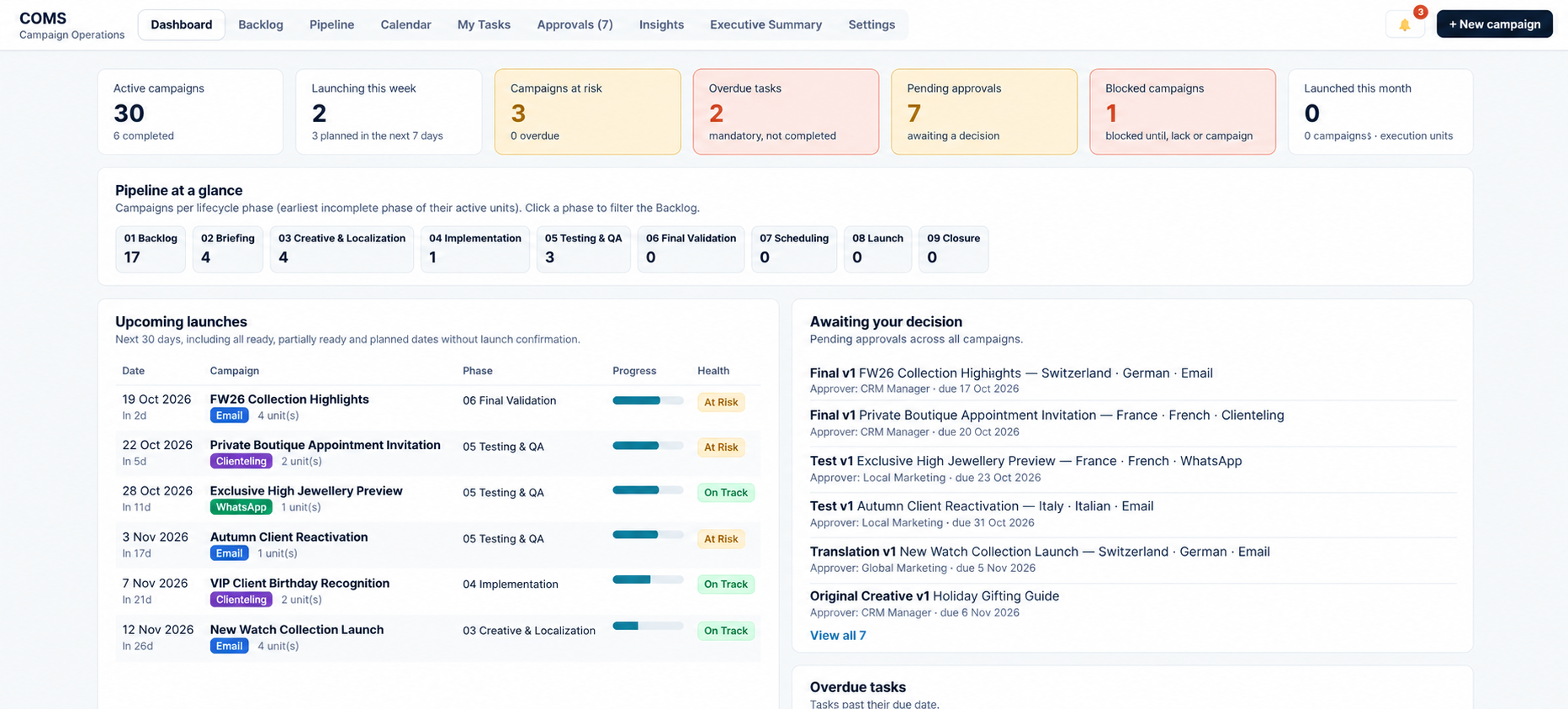
1. Dashboard — The Bigger Picture
The dashboard acts as the operational control center, providing an overview of active campaigns, upcoming launches, pending approvals and potential delays. Instead of navigating spreadsheets or chasing updates, CRM Managers can quickly identify priorities and understand where attention is needed.
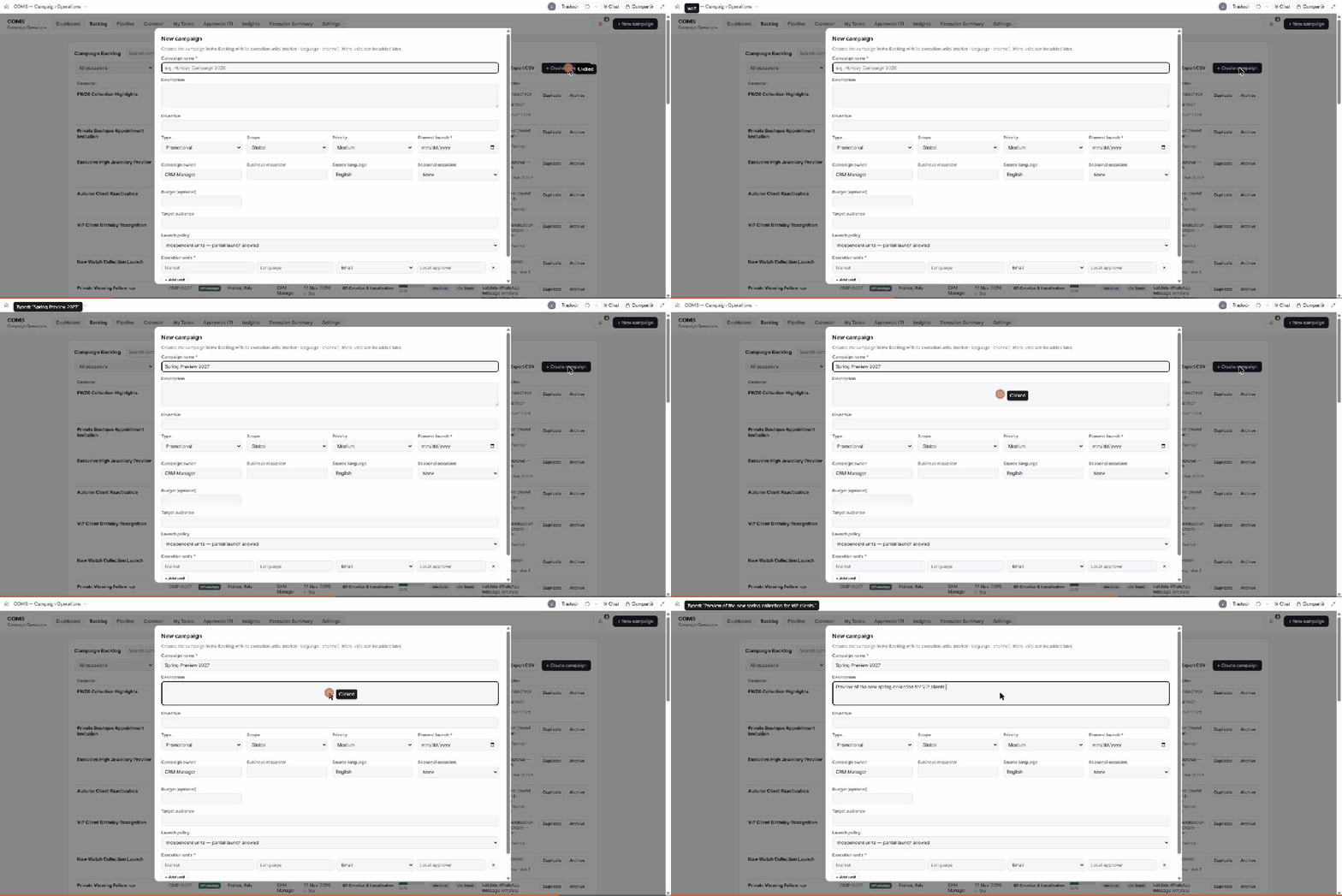
2. Campaign Backlog — From Planning to Execution
Every campaign starts with a plan. The backlog centralizes initiatives across Email, SMS, WhatsApp and Clienteling, with information about priorities, markets, owners and launch dates. It creates a structured campaign roadmap while supporting both global and local initiatives.
3. Campaign Workflow — Knowing Exactly Where Things Stand
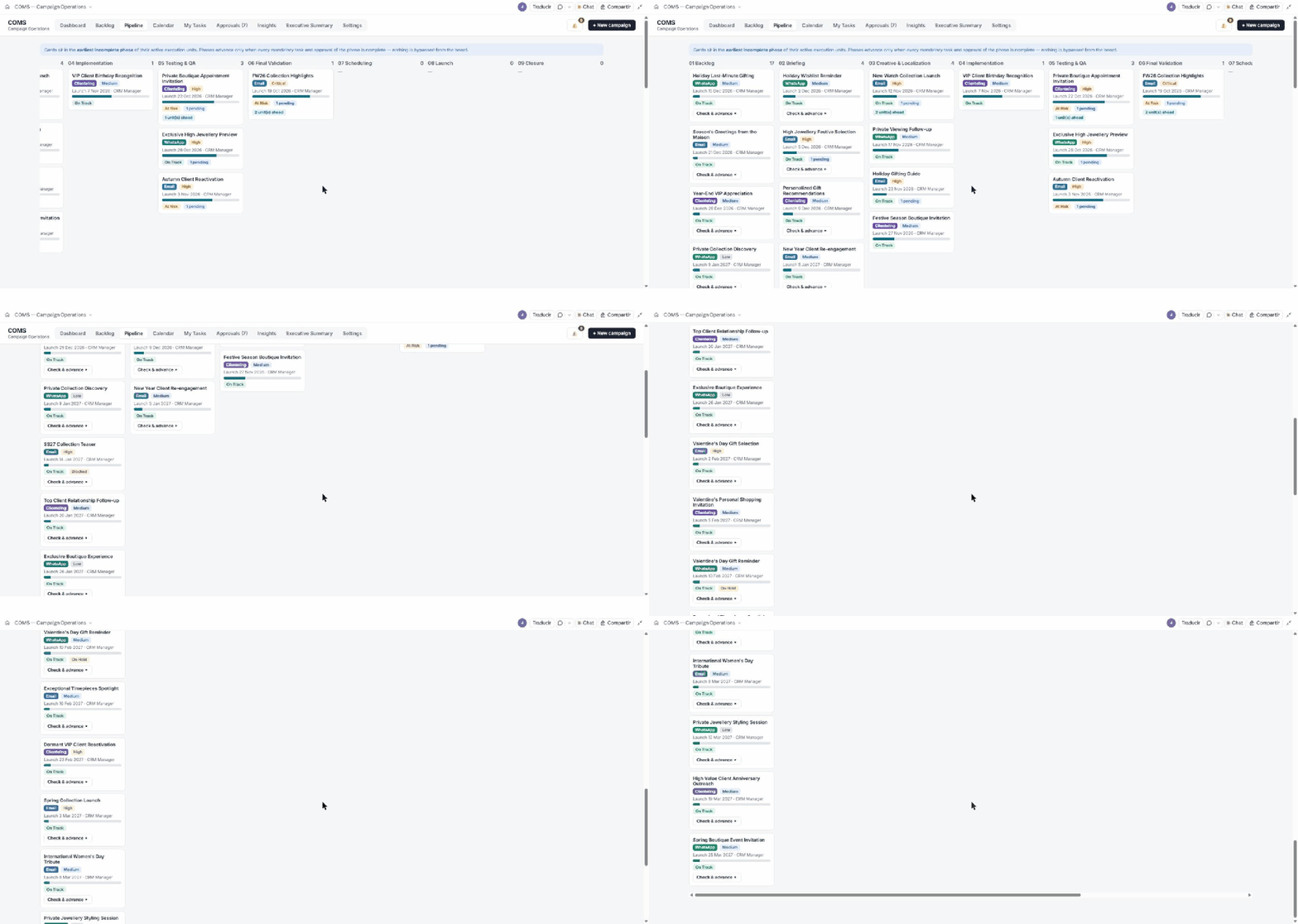
At the heart of the platform is a workflow reflecting the actual stages of CRM campaign execution:
Backlog → Briefing → Creative & Localization → Implementation → Testing & QA → Final Validation → Scheduling → Launch → Closure
Each phase includes specific activities, responsibilities and validation requirements. It also supports market-specific progress, meaning one market can be ready to launch while another is still awaiting approval.
4. Campaign Calendar — Keeping Launches on Track
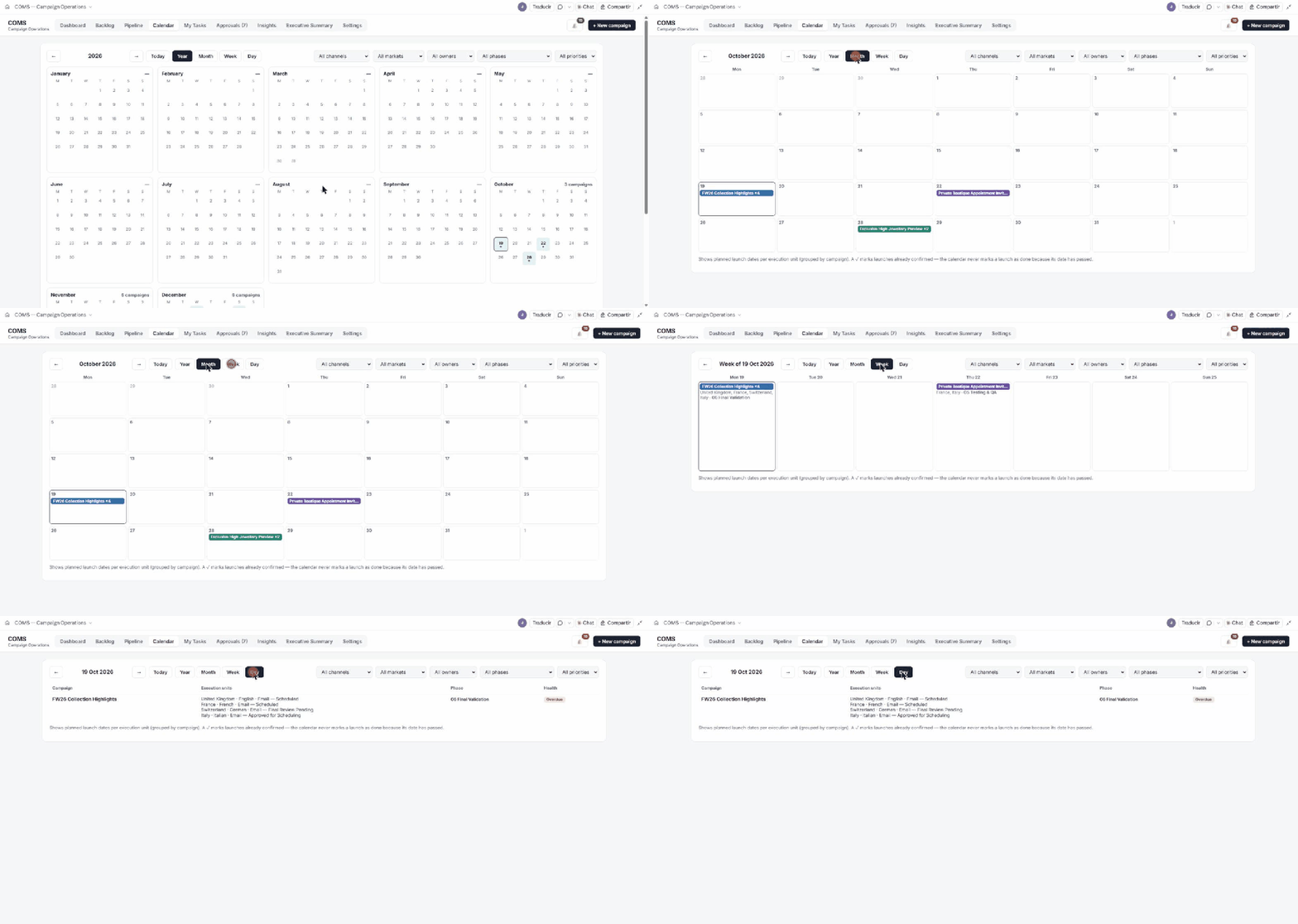
The calendar provides a visual overview of upcoming launches across markets and channels. It helps anticipate busy periods, identify scheduling conflicts and manage priorities more proactively.
5. Tasks & Approvals — Making Collaboration Easier
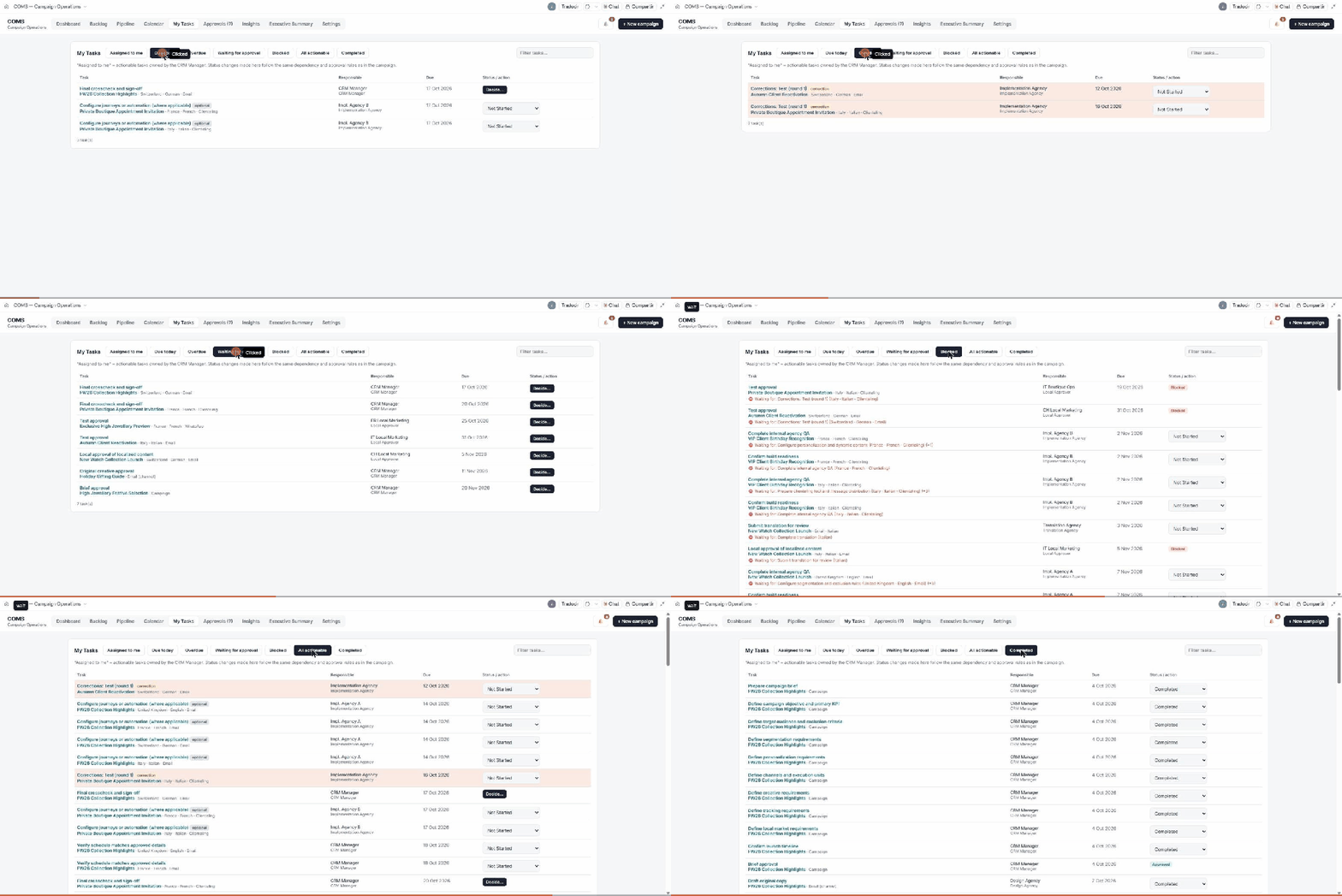
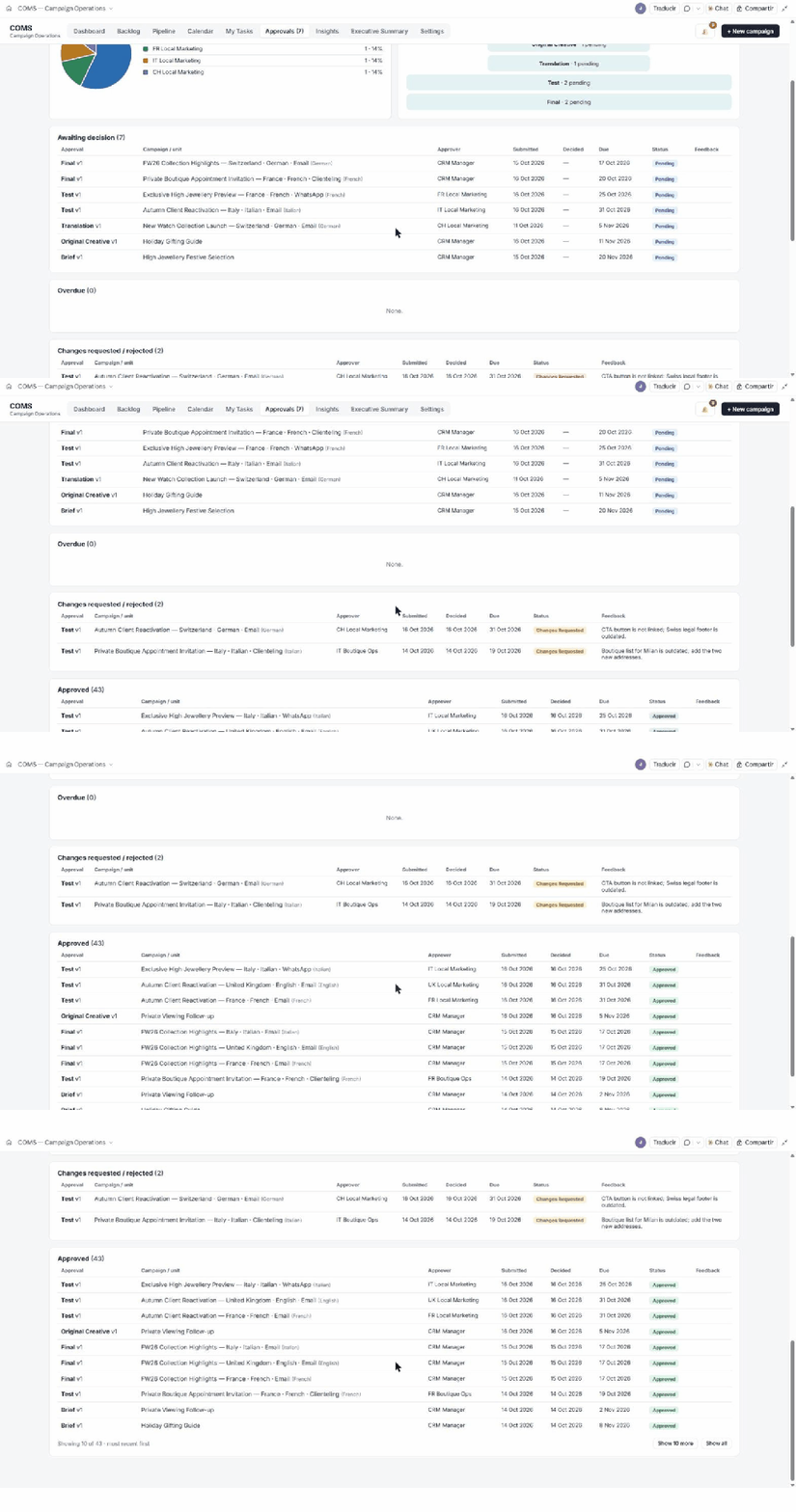
Campaign execution involves multiple contributors: translation agencies, implementation partners, local marketing teams and CRM Managers. This section brings task assignments, deadlines, feedback and approval cycles into one place. It also introduces a structured final crosscheck before campaigns are scheduled. The objective is simple: less time chasing approvals, more clarity on who’s responsible for what.
6. Insights — Understanding What’s Slowing Us Down
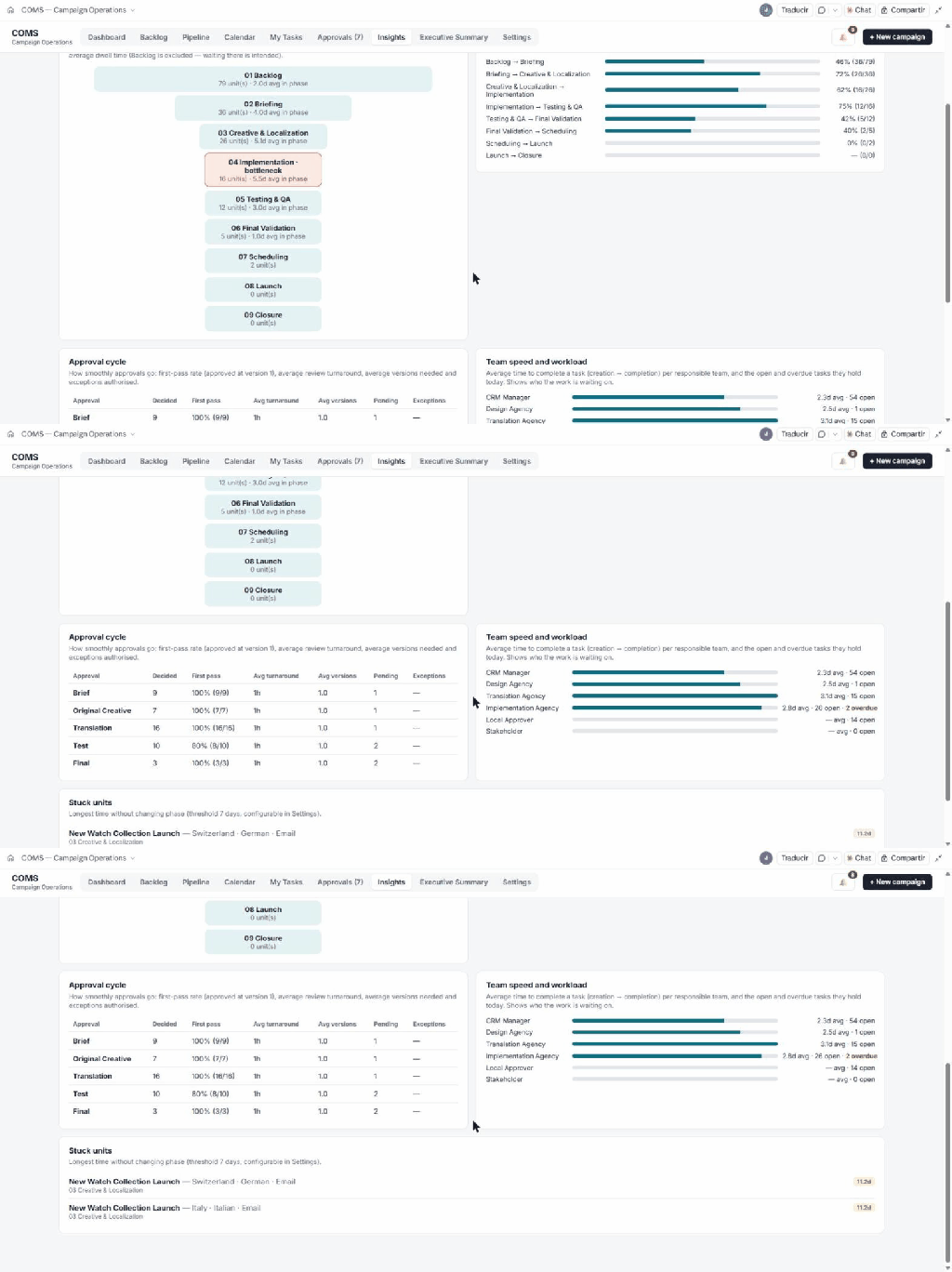
Knowing where campaigns stand is useful. Understanding why they get delayed is even more valuable.The Insights section turns operational data into actionable information, helping identify bottlenecks, monitor pipeline health and measure the average time campaigns spend at each stage.
Are translations consistently delaying launches? Is testing taking longer than expected? Are approval cycles creating recurring bottlenecks? What is the average time-to-market?
The goal is to move beyond campaign tracking towards continuous process improvement.
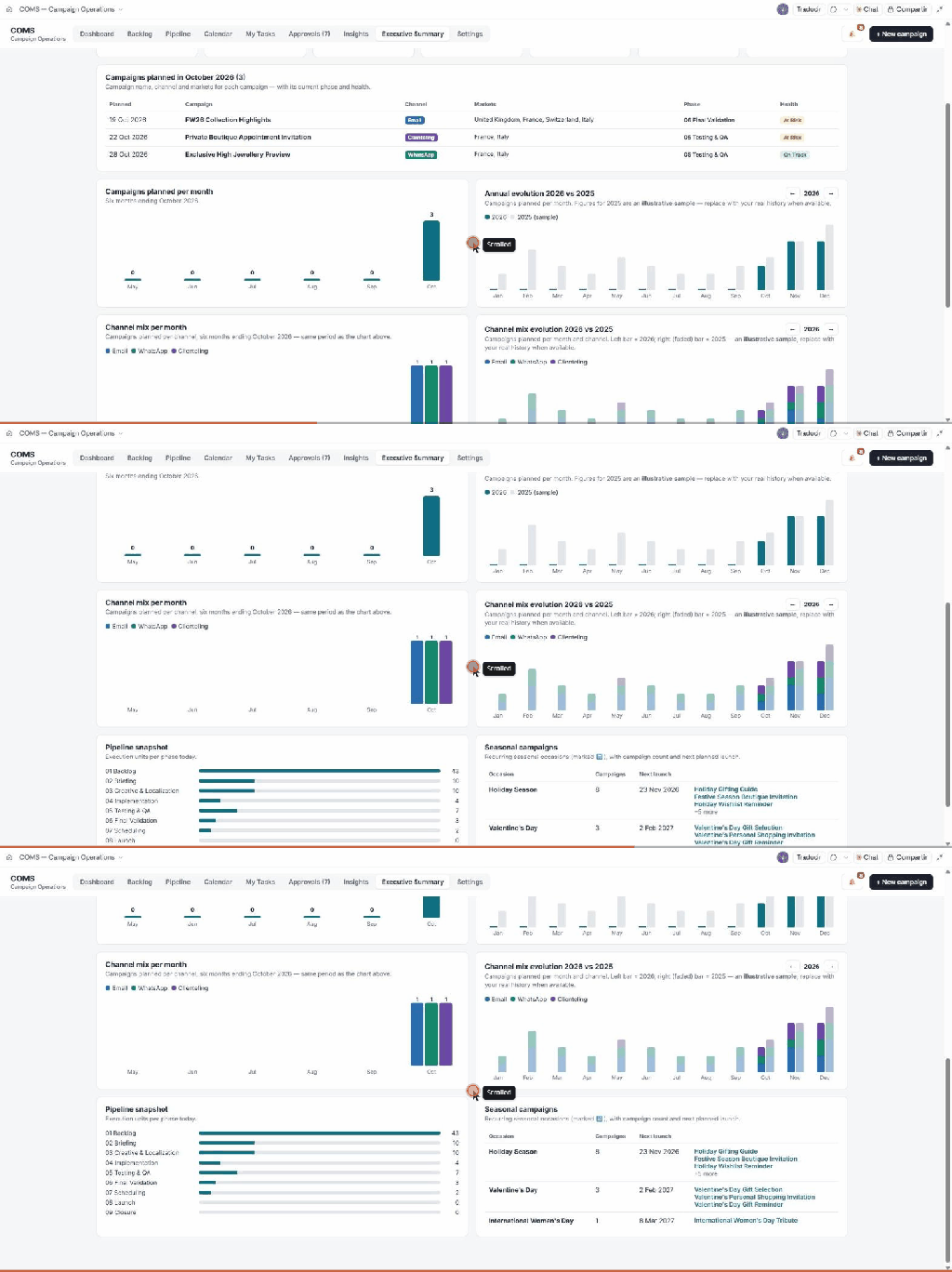
7. Executive Summary — From Operations to Strategic Visibility
The Executive Summary provides an executive cockpit with key indicators such as campaign volumes, launches by channel, year-over-year comparisons and overall pipeline performance. For example, comparing the number of Email, WhatsApp or Clienteling campaigns launched against the previous year helps illustrate how CRM activity is evolving.
It’s about bridging the gap between day-to-day operations and strategic decision-making, without overwhelming stakeholders with operational details.
8. Settings — Flexibility Without Losing Structure
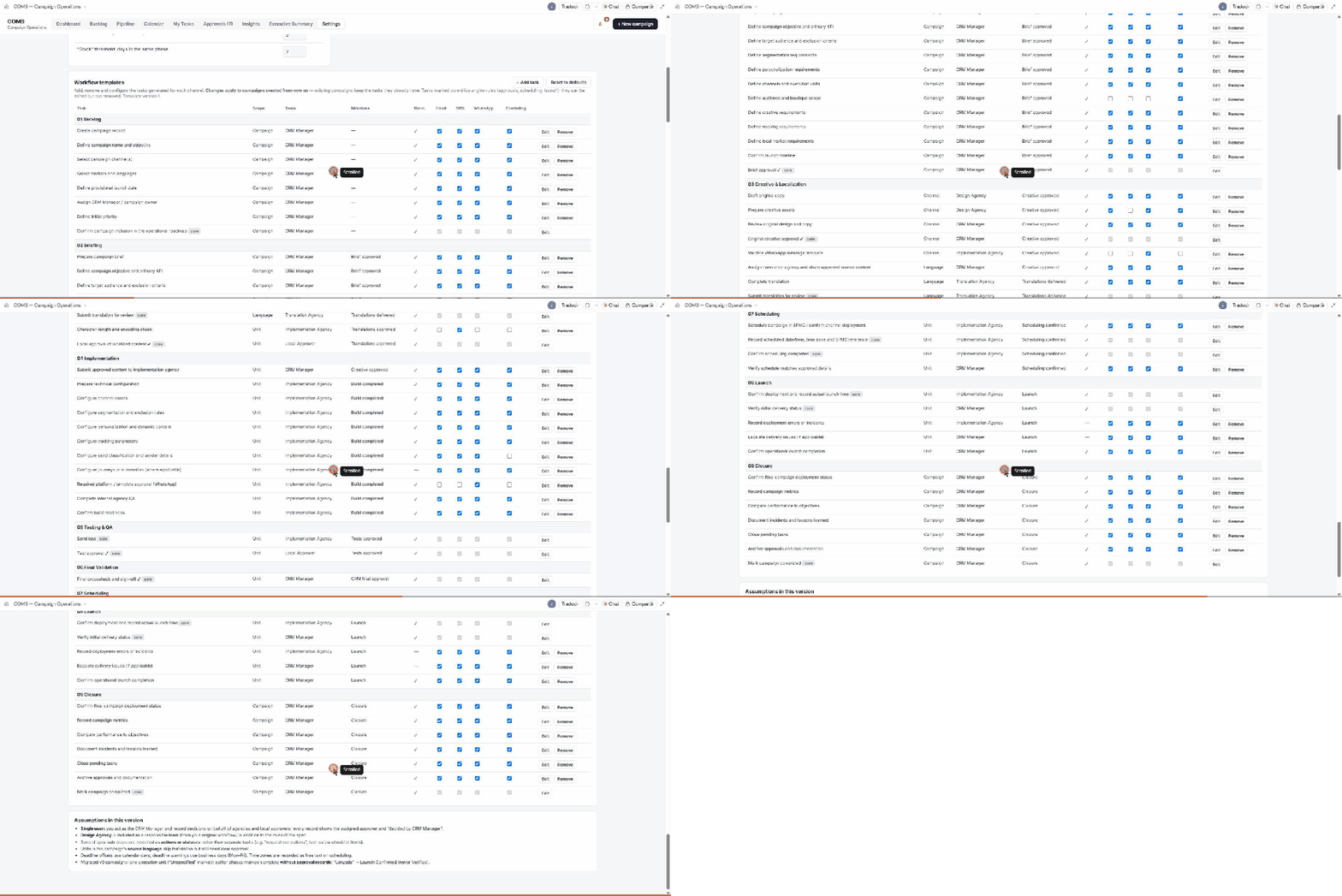
One thing I’ve learned is that there’s no universal campaign management process. Different organizations, markets and channels require different timelines, approval steps and ways of working.
That’s why I wanted to avoid building a rigid solution. The Settings section allows users to customize workflows, adjust deadlines and configure operational rules in detail. The idea is to make the tool adapt to the business, not the other way around.
What I Learned Along the Way
Beyond the application itself, one of the most interesting aspects of this project has been exploring how AI-assisted development can turn professional experience into a tangible digital solution. My starting point was understanding the business problem, defining the requirements and designing a workflow based on real operational needs.
AI helped me translate that vision into a working application. For me, this represents an exciting shift: professionals with deep business knowledge can now take a much more active role in building the tools they wish existed.
The platform is still evolving, with opportunities to explore further automation and integrations. But the underlying objective remains the same: not simply executing campaigns faster, but making CRM operations more transparent, measurable and continuously improvable.
What’s Next? — Future Improvements
While the platform is already taking shape, there are several opportunities I’d love to explore further:
- Smart Notifications & Reminders: Automatically notify approvers and campaign owners when deadlines are approaching, approvals are pending or actions are overdue.
- Creative Previews: Embed campaign mockups directly into campaign tickets, allowing stakeholders to review email, SMS or WhatsApp communications without switching between different tools.
- Automated Performance Reporting: Integrate with platforms like Salesforce Marketing Cloud to automatically retrieve campaign results and connect execution data with performance metrics.
- AI-Powered Audience & Campaign Recommendations: Leverage historical campaign results and customer insights to suggest relevant audiences, identify engagement opportunities and recommend the next best campaign.
- AI-Assisted Campaign Briefing: Help CRM teams generate campaign briefs, suggest tasks and identify requirements based on campaign objectives and previous initiatives.
- Workload & Capacity Planning: Analyze upcoming campaigns, deadlines and historical execution times to anticipate resource constraints and potential bottlenecks before they happen.
- Campaign Knowledge Base: Build a searchable repository of past campaigns, including creative assets, audiences, results and key learnings. This would help teams reuse successful approaches, avoid repeating past mistakes and make more informed decisions when planning future campaigns.
Ultimately, the ambition is to gradually evolve the platform from a campaign management tool into a more intelligent, data-driven workspace that supports both operational efficiency and strategic CRM decision-making. And that’s what makes this project particularly exciting: there’s always another process to simplify, another insight to uncover and another opportunity to improve how CRM teams work.
I’d Love to Hear Your Thoughts
This project was inspired by challenges I’ve personally encountered, but I know many CRM and Marketing professionals face similar situations.
How does your team manage campaign operations today? Are spreadsheets, emails and manual follow-ups still part of your workflow? What are the biggest bottlenecks you experience when coordinating campaigns across teams and markets?
I’d genuinely love to hear your feedback, ideas or suggestions — particularly from people working in CRM Operations, Marketing Technology and Client Engagement.
After all, some of the best ideas for improving processes come from exchanging experiences with people facing the same challenges.

